


You’ve probably heard of an IRA, and you may wonder if you should set one up for yourself. But since no one taught you about IRAs, you probably have questions.
What exactly is an IRA? Do you need one? And how do they work? Are you even eligible to have one?
You’ve got questions and I’ve got answers.
What is it?
IRA stands for Individual Retirement Arrangement.
An IRA is a retirement savings account owned directly by an individual. An IRA allows you to save for retirement by depositing money in a tax deferred account each year up to a specific limit.[1]
“An IRA allows an individual to save for retirement by depositing money in a tax deferred account.”
Once money is deposited[2] into your IRA, it can be held in cash or used to invest in a variety of securities like individual stocks, individual bonds, mutual funds, or exchange traded funds.
IRAs come in two flavors: Traditional and Roth.
Traditional IRA
Most anyone with earned income can contribute to this type of IRA. In 2026, the maximum contribution allowed is $7,500, plus an additional $1,100 if you are age 50 or over.[3]Contributions are made using money that you’ve already paid income tax on.

Once the money is in the account, any dividend income, interest income, or capital gains that would otherwise be taxable are not taxed until you begin taking money out of the account in retirement.
When you begin taking money out of the account it is taxed like ordinary income; in the same manner that your wages were taxed.
If your income is below a certain threshold, your Traditional IRA contribution may be tax deductible.[4]
Roth IRAs
Only certain people with earned income can contribute directly to a Roth IRA. Eligibility is based on income and filing status.
For example: if you are married and filing a joint return, you can make a full $7,500 contribution only if your adjusted gross income is less than $242,000 in the year of contribution.
As with Traditional IRAs, contributions are made with dollars that have already been taxed. Roth IRA contributions are never tax deductible.
So why bother? As with Traditional IRAs, any dividend income, interest income, or capital gains on investments in the account that would otherwise be taxable are not taxed – ever. When you take money out of your Roth IRA in retirement, none of it is taxed.
This type of IRA also avoids Required Minimum Distributions during the original account owner’s lifetime.
Why would I want an IRA?
The key benefits of an IRA are the tax breaks.
Sometimes you get tax breaks today (tax-deductible Traditional IRA contributions), tax breaks over time (tax deferral on investments gains and investment income in a Traditional IRA), or tax breaks tomorrow (tax-free investment gains and investment income in a Roth IRA).
This may feel abstract, so let’s do some simple math.
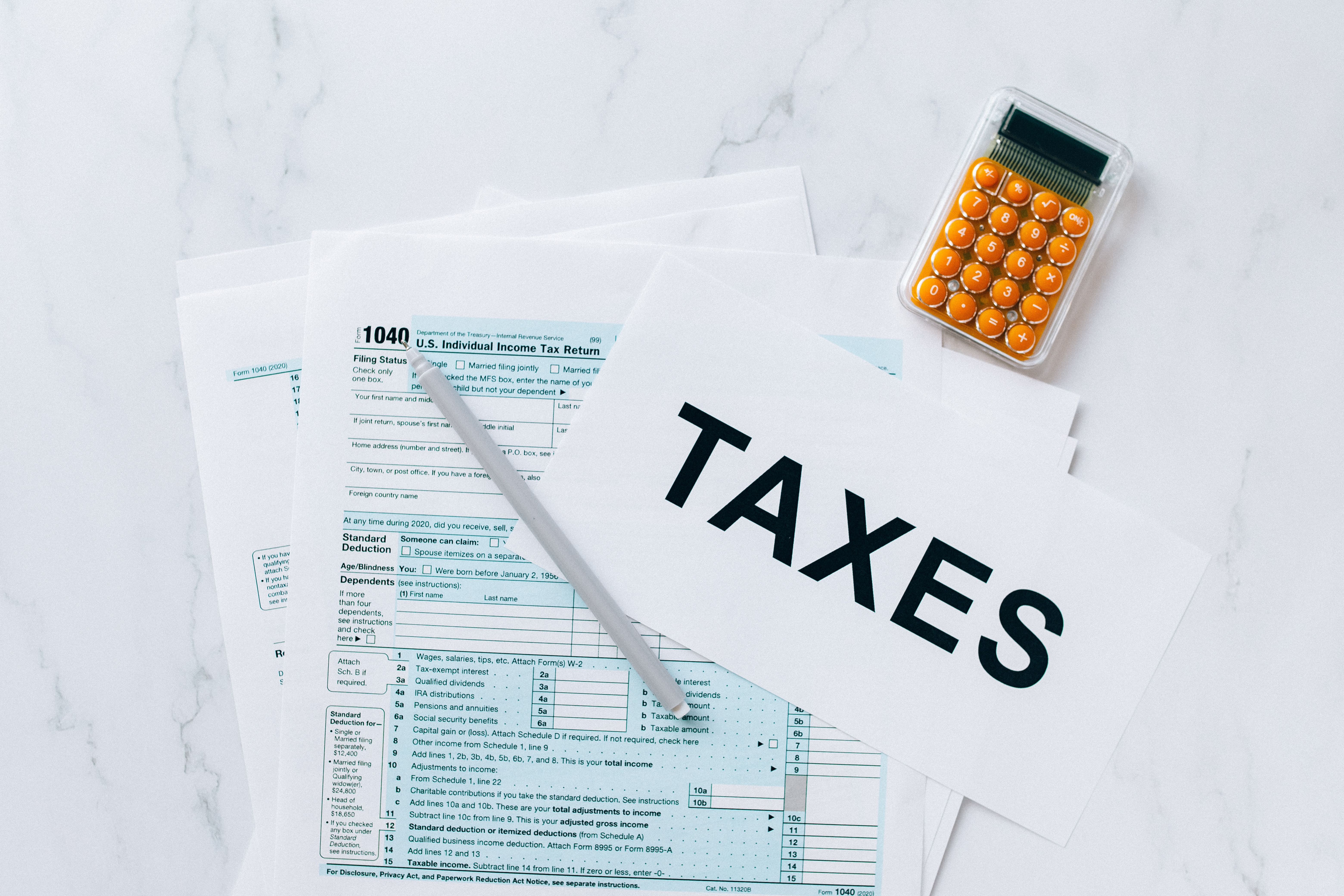
Deductible contributions
Let’s say you are married and file a joint return. Your modified adjusted gross income is less than $129,000, and both you and your spouse make $7,500 Traditional IRA contributions.
You can now deduct $15,000 when computing your adjusted gross income.
Adjusted gross income drives your tax bill, so lowering this number will result in a lower tax bill. That’s up to $3,300 less in taxes you’ll pay for the year. Put another way, that’s up to $3,300 that will stay in your pocket.
But what if you earn too much to deduct?
Tax deferral
Regardless of your ability to deduct your contributions, you’ll still enjoy tax deferral on your IRA savings.
For example, say you choose to invest your IRA money in shares of the well-diversified XYZ fund — during the year, XYZ fund zooms up 30%. Your $7,500 is now $9,750, and you want to take your profit and invest it in another security.
If you did this in a non-IRA account, your $9,750 would become only $9,412 because you’d owe capital gains taxes. In an IRA, there are no capital gains taxes due that year. This means two things: 1) your tax bill doesn’t go up that year due to selling XYZ fund, and 2) more of your money stays invested — which means more of your money is compounding.
Over time, keeping those dollars working (instead of sending some of them to the federal government) means you could have a bigger pot of money to enjoy in retirement. Tax deferral on your investments is like fertilizer for a garden – it can help things grow a little faster.
What’s the catch?
I’m glad you asked. IRAs come with some caveats that you need to be aware of before you make that first contribution.
- #1: In general, you can’t take money out of an IRA until you reach age 59½. If you take money out early (and you don’t qualify for an exception), you’ll be subject to a 10% penalty tax in addition to any income tax due.
- #2: You need to make some choices about what investments to own. Putting cash in an IRA and letting it just sit there uninvested defeats the purpose of the account.
- #3: The burden of record keeping is on you. If you make nondeductible contributions to a Traditional IRA, you need to track those. Why? Because if you’ve already paid taxes on those dollars (and got no deduction the year you contributed), you don’t want to pay taxes again when you withdraw the funds from your Traditional IRA. The IRS won’t keep track of this for you.
- #4: Traditional IRAs are subject to Required Minimum Distributions (RMDs) once the account owner attains age 73 or 75 (depending on the account owner’s year of birth). At some point the tax deferral party will end, and the tax man will demand his cut. RMDs are calculated using this formula:
IRA Account Balance on December 31 of Prior Year = RMD
Uniform Lifetime Table Factor[5]
If you fail to take your annual RMD, you’ll be assessed a 50% penalty tax on the RMD amount in addition to the ordinary income tax due on the distribution.

Do I need one?
You probably do but it’s hard to know unless you’ve gone through the Financial Planning process to determine how much and where you need to save.
Most retirement savers need an IRA and many investors could benefit from having one. An IRA is a powerful wealth building tool.
“It’s a powerful wealth-building tool.”
If you are a younger investor (I’m looking at you younger Millennials and Gen Z), opening an IRA now and funding it every year until you retire can set you up for exponential growth over time.
Ready to make an IRA part of your Financial Plan?
Book Your Free One-Hour Consultation
The information offered is provided to you for informational purposes only. Baird is not a legal or tax services provider and you are strongly encouraged to seek the advice of the appropriate professional advisors before taking any action.
[1] I want to take a moment to emphasize that if you don’t contribute to an IRA for a given tax year, you can’t ever go back and make up those missed contributions. Once the annual opportunity is gone, it’s gone forever.
[2] Deposits to an IRA are commonly referred to as contributions.
[3] This is known as a catch-up contribution.
[4] Consult your tax advisor to see if you qualify to deduct all or a portion your Traditional IRA contributions.
8886193.1