


Washington State has long been known for its unique tax structure—particularly its absence of a traditional personal income tax. For decades, that simplicity made it an attractive place for entrepreneurs, executives, and retirees alike.
But as of mid‑2026, the state’s tax environment is undergoing a notable shift. While Washington remains economically vibrant, recent policy changes are prompting many individuals and families to take a closer look at how their location fits into their long-term financial strategy.
From Simplicity to Complexity
Historically, Washington’s appeal was straightforward: no wage income tax, a growing economy, and strong job markets—especially in technology and innovation.
In recent years, however, the state has introduced several targeted taxes, including:
- A payroll tax tied to public long-term care funding
- A capital gains tax on higher levels of investment income
- Additional surtaxes for larger realized gains
For example, beginning in 2025, long-term capital gains above certain thresholds may be taxed at rates reaching 9.9% at the state level, depending on income levels.
While these changes do not affect all residents equally, they can have a meaningful impact on:
- Business owners contemplating a sale
- Individuals with concentrated stock positions
- Families planning significant portfolio rebalancing
The broader takeaway: Washington’s tax profile is no longer defined by the absence of income tax alone.
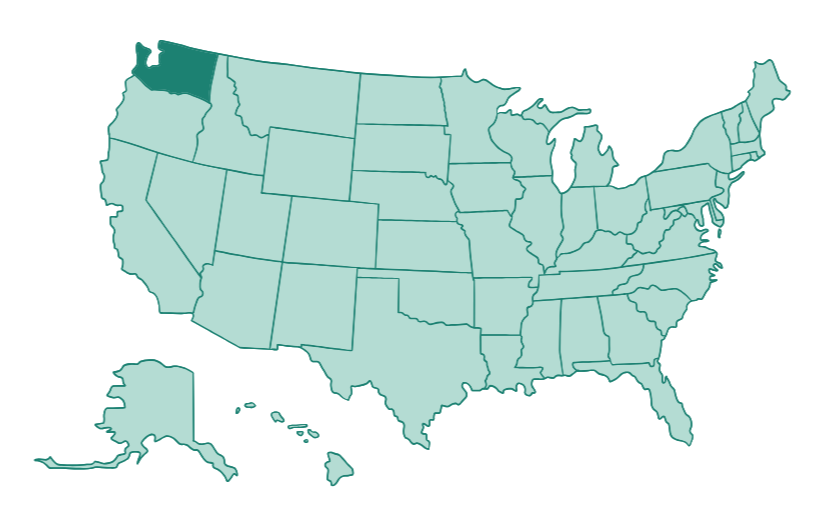
How Washington Compares Nationally
To better understand where Washington stands today, it helps to zoom out.
The Tax Foundation’s State Tax Competitiveness Index evaluates states based on the structure of their overall tax systems—not just rates, but how taxes are applied across income, property, and consumption.
In recent rankings, states with simpler, lower-rate systems—often with broader tax bases—tend to score higher in competitiveness.
At the same time, it’s important to remember:
- Washington still does not tax wage income
- However, it does rely more heavily on sales and excise taxes, which can increase overall tax exposure depending on spending patterns
Looking at total tax burden rather than any single tax category provides a more complete picture of how a state compares.
Migration Trends: A More Nuanced Story
Much has been made nationally about migration from higher-tax to lower-tax states—but the reality is more nuanced.
Recent IRS and Tax Foundation data shows:
- Continued population and income growth in states like Florida and Texas
- Net outflows from states such as California, New York, and Illinois
Washington sits somewhere in the middle of this trend.
While it continues to attract talent—particularly in the Seattle metro area—it has also seen:
- Slower in‑migration compared to prior years
- Increased attention from higher‑income households evaluating tax exposure
Policy changes affecting capital gains and high earners have added another variable to these discussions, particularly for individuals with flexibility around where they reside.
Still, taxes are rarely the sole driver. Career opportunities, lifestyle, family ties, and housing costs remain critical factors in any relocation decision.

What This Means for Financial Planning in 2026
For Washington residents, the current environment is less about reacting—and more about planning proactively.
1. Timing of Major Financial Events
If you are considering:
- Selling a business
- Exercising stock options
- Realizing significant capital gains
The timing and your state of residency in that year can materially affect outcomes.
2. Understanding Residency Rules
Establishing or changing domicile is complex. States evaluate:
- Days spent in-state
- Primary residence location
- Financial, professional, and social connections
Proper planning and documentation are essential.
3. Looking Beyond Income Taxes
Even in states without traditional income taxes, other components—such as:
- Sales taxes
- Property taxes
- Estate taxes
can meaningfully influence overall tax exposure.
4. Aligning Financial Strategy With Lifestyle Goals
Not every client should—or needs to—relocate. In many cases, the better solution is optimizing within Washington’s framework through:
- Tax-efficient investment strategies
- Coordinated estate planning
- Thoughtful income timing
The Bigger Picture: Staying Grounded Amid Change
Washington remains one of the country’s most dynamic and opportunity-rich states. Its economy, innovation ecosystem, and quality of life continue to be strong drivers of long-term growth.
As Washington's tax environment continues to mature, it reinforces an important truth:
Where you live is an integral part of your financial plan, not just a lifestyle choice.
For high-income households, even incremental differences in tax policy can create meaningful financial impacts over time. The key is not to react to headlines, but to approach decisions with clarity, data, and a long-term perspective.
How Pinnacle Can Help
At Pinnacle Private Wealth Advisors, we understand that Washington's evolving tax landscape can have a meaningful impact on your overall financial picture.
Whether you're planning for a future liquidity event, evaluating residency considerations, managing a concentrated stock position, or simply looking to better position your current strategy, our team provides guidance tailored to your unique situation.
Based in Bellevue, WA, we specialize in comprehensive wealth management, tax-aware investment strategies, and long-term financial planning for individuals and families with complex financial needs.
If you're evaluating how Washington's current tax landscape may affect your financial plan, investment strategy, business succession plans, or future residency decisions, we invite you to start a conversation with our team.
Sources
Tax Foundation – 2026 State Tax Competitiveness Index
https://taxfoundation.org/research/all/state/2026-state-tax-competitiveness-index/
Tax Foundation – State Tax Competitiveness Index Methodology
https://taxfoundation.org/research/all/state/2026-state-tax-competitiveness-index/
Tax Foundation – State Migration Trends & IRS Data
https://taxfoundation.org/data/all/state/state-migration-trends-map-americans-moving-population-changes/
Tax Foundation – Facts & Figures: State Tax Data (2025)
https://taxfoundation.org/data/all/state/2025-state-tax-data/
Tax Foundation – State Tax Competitiveness Index Rankings and Analysis
https://taxfoundation.org/research/all/state/2026-state-tax-competitiveness-index/
Securities and advisory services offered through LPL Financial, a registered investment advisor. Member FINRA/SIPC.
Content in this material is for general information only and not intended to provide specific advice or recommendations for any individual. This information is not intended to be a substitute for specific individualized tax advice. We suggest that you discuss your specific tax issues with a qualified tax advisor.
